

Understanding Cognitive Behavioural Therapy
Cognitive Behavioural Therapy (CBT) is an evidence-based psychological therapy that helps people understand the connection between their thoughts, emotions and behaviours. Learn how CBT works and how it can support lasting, practical change.

Natalee Zolotas
Director/Practice Manager
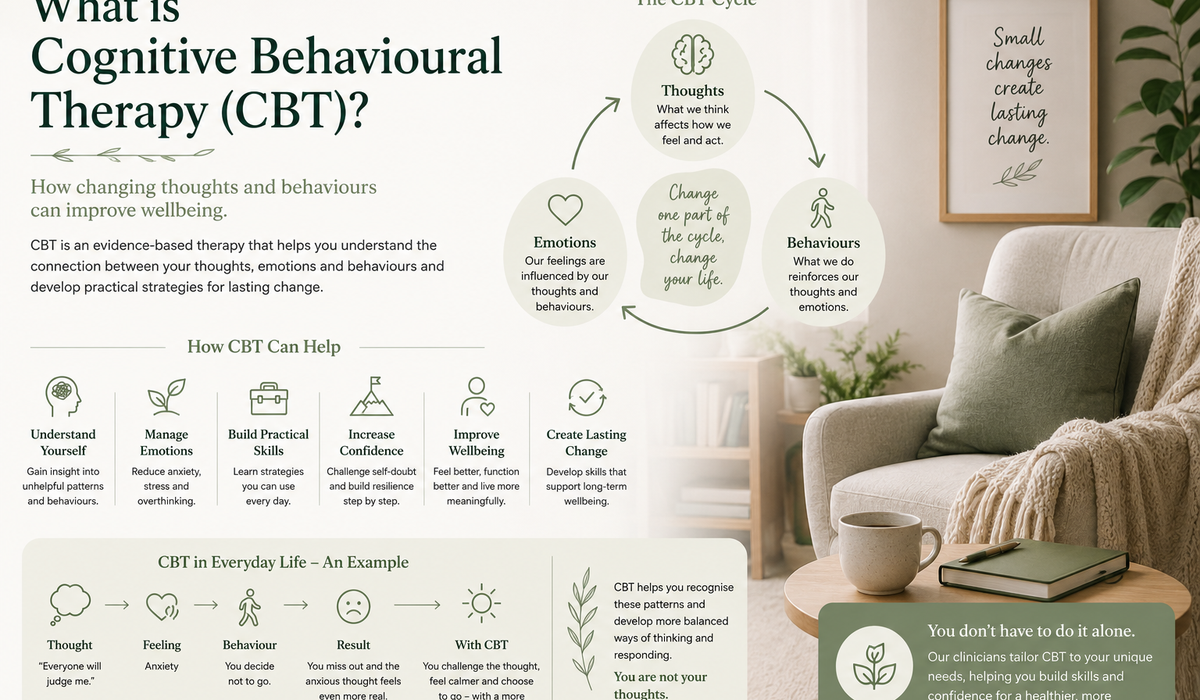
Understanding Cognitive Behavioural Therapy (CBT)
How Changing Thoughts and Behaviours Can Improve Wellbeing
Our thoughts, emotions and behaviours are closely connected. Sometimes, unhelpful thinking patterns can keep us feeling stuck, overwhelmed or anxious without us even realising it.
Cognitive Behavioural Therapy (CBT) is one of the most researched and effective psychological therapies. It helps people understand these patterns and develop practical skills to improve their emotional wellbeing and everyday functioning.
Rather than focusing only on the past, CBT also helps you develop strategies you can use in your daily life.
What is CBT?
Cognitive Behavioural Therapy is an evidence-based approach that explores the relationship between your thoughts, emotions and behaviours.
For example, if you believe "I'm going to fail," you may begin to feel anxious and avoid situations that challenge you. Over time, avoidance can reinforce those beliefs and make anxiety feel even stronger.
CBT helps identify these unhelpful patterns and replace them with more balanced, realistic ways of thinking and responding.
What can CBT help with?
CBT is widely used to support people experiencing:
- Anxiety and excessive worry
- Depression and low mood
- Stress and burnout
- Trauma-related symptoms
- Low self-esteem
- Perfectionism
- Panic attacks
- Relationship and interpersonal difficulties
CBT is tailored to your individual goals and can be adapted to suit many different life experiences.
What happens during CBT?
CBT is a collaborative process. Together, you and your clinician work to better understand the patterns contributing to your difficulties and develop practical strategies for change.
Therapy may include:
- Exploring helpful and unhelpful thinking patterns
- Understanding the connection between thoughts, emotions and behaviours
- Learning practical coping strategies
- Developing healthier ways of responding to challenges
- Practising new skills between sessions
The goal is to help you become your own therapist by building skills you can continue using long after therapy has ended.
How CBT can help
CBT can help you:
- Better understand yourself
- Reduce anxiety and overthinking
- Improve emotional regulation
- Build healthier coping strategies
- Increase confidence and resilience
- Develop practical skills for everyday life
- Create lasting, meaningful change
Many people begin to notice improvements as they learn new ways of responding to life's challenges.
Take the Next Step
If you're looking for practical, evidence-based strategies to improve your mental health and wellbeing, Cognitive Behavioural Therapy may be a helpful place to start.
Our clinicians tailor CBT to your individual needs, helping you better understand your experiences and develop skills that support lasting change.
Keep reading
All articles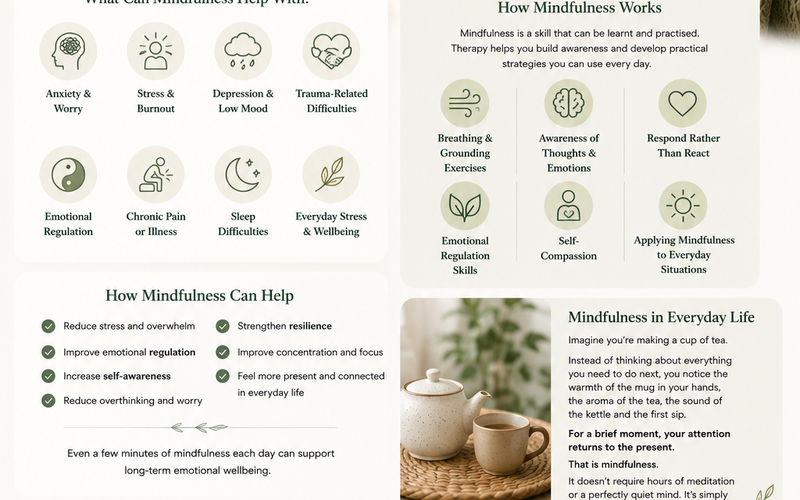
Understanding Mindfulness Based Strategies
Mindfulness is an evidence-based approach that helps you become more aware of your thoughts, emotions and physical sensations without judgement. Learn how mindfulness-based strategies can reduce stress, improve emotional wellbeing and help you respond more calmly to life's challenges.
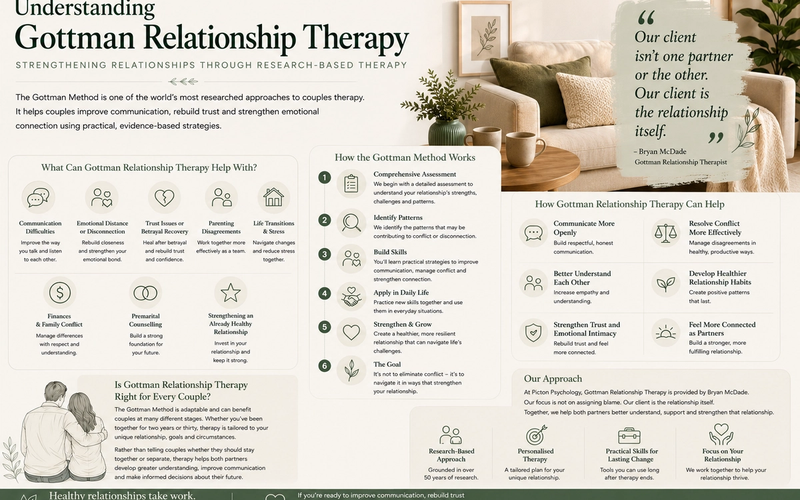
Understanding Gottman Relationship Therapy
The Gottman Method is an evidence-based approach to couples therapy developed from more than 50 years of relationship research. Learn how Gottman Relationship Therapy helps couples improve communication, rebuild trust and strengthen emotional connection.
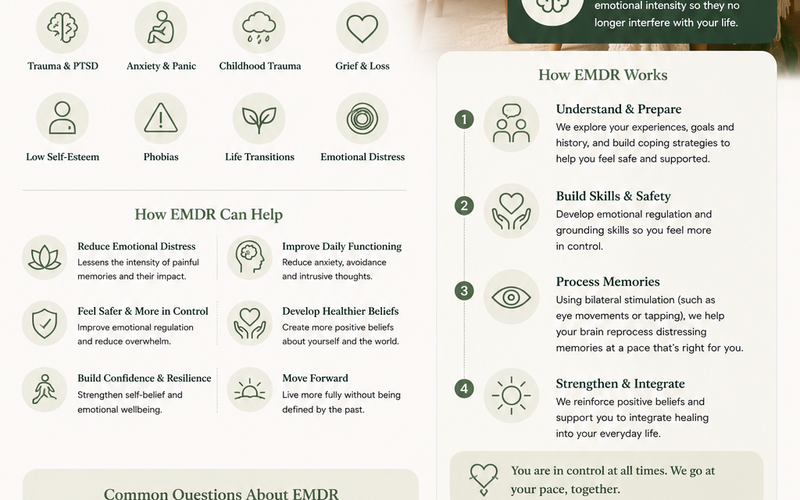
Understanding EMDR Therapy
Eye Movement Desensitisation and Reprocessing (EMDR) is an evidence-based therapy that helps the brain process distressing memories and reduce their emotional impact. Learn how EMDR works, what to expect during treatment and how it can support recovery from trauma and other distressing life experiences.