Understanding Trauma Informed Therapy
Trauma-informed therapy is an evidence-based approach that recognises the lasting effects trauma can have on the mind, body and nervous system. Learn how trauma-informed therapy creates a safe, supportive environment for healing using personalised, evidence-based treatment.

Natalee Zolotas
Director/Practice Manager
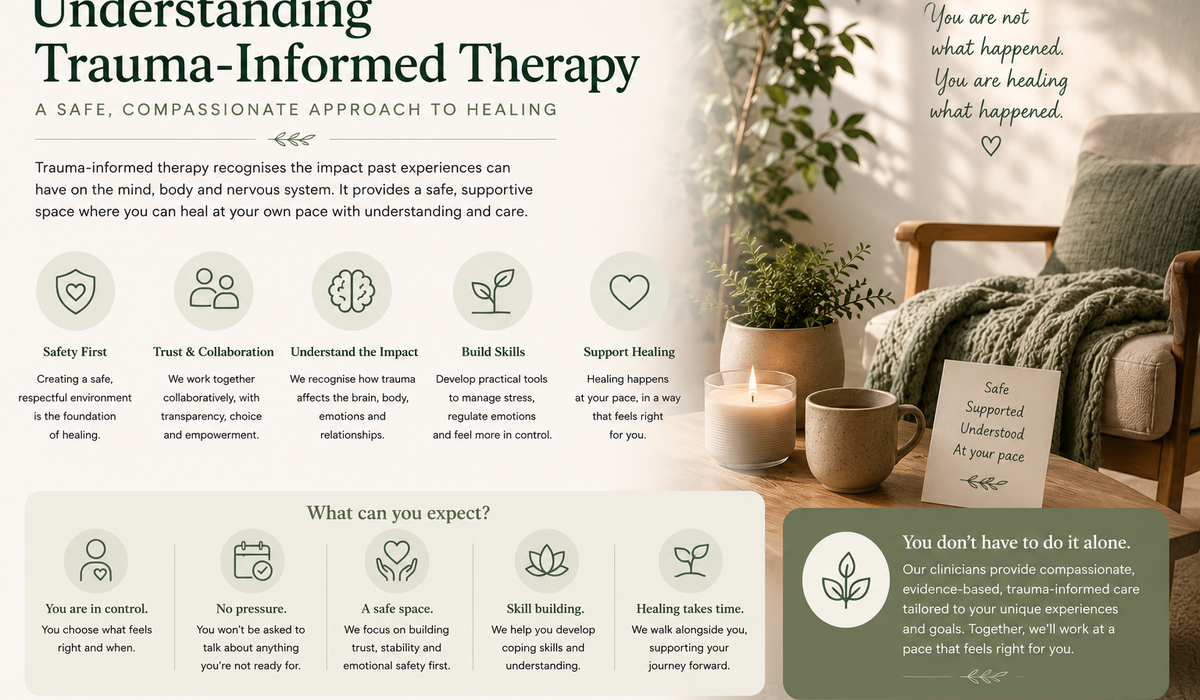
Understanding Trauma-Informed Therapy
A Safe, Compassionate Approach to Healing
Trauma can affect much more than our memories. It can influence how we think, feel, respond to stress and connect with others.
Trauma-informed therapy recognises that these responses are often normal reactions to difficult experiences.
Trauma-informed therapy asks, "What has happened to you?"
This compassionate approach helps create a safe foundation for healing.
What is trauma-informed therapy?
Trauma-informed therapy is not one single type of therapy.
Instead, it is an approach that recognises the impact trauma can have on every aspect of a person's life and tailors treatment to meet their individual needs.
A trauma-informed clinician understands how trauma may influence emotions, relationships, behaviours and the nervous system, ensuring therapy progresses at a pace that feels safe and supportive.
Building trust, safety and collaboration is central to the therapeutic process.
What can trauma-informed therapy help with?
Trauma-informed therapy may support people experiencing:
- Post-traumatic stress and PTSD
- Childhood trauma
- Anxiety and panic
- Depression and low mood
- Emotional regulation difficulties
- Relationship and attachment challenges
- Grief and loss
- Ongoing effects of stressful or overwhelming experiences
Treatment is always personalised because no two people experience trauma in the same way.
How does trauma-informed therapy work?
Trauma-informed therapy focuses on helping you feel safe, understood and supported throughout your recovery.
Depending on your individual needs, your clinician may draw on evidence-based approaches including:
- Eye Movement Desensitisation and Reprocessing (EMDR)
- Cognitive Behavioural Therapy (CBT)
- Trauma-Focused Cognitive Behavioural Therapy (TF-CBT)
- Cognitive Processing Therapy (CPT)
- Narrative Therapy
- Mindfulness-Based Strategies
Your clinician may also integrate other therapeutic approaches to ensure treatment is tailored specifically to your goals, experiences and stage of recovery.
How trauma-informed therapy can help
Trauma-informed therapy aims to help you:
- Better understand your trauma responses
- Feel safer in your daily life
- Improve emotional regulation
- Reduce the impact of traumatic memories
- Strengthen confidence and resilience
- Build healthier relationships
- Move towards recovery at your own pace
Healing doesn't mean forgetting what happened. It means reducing the impact trauma has on your life so you can move forward with greater confidence and hope.
Why a personalised approach matters
There is no single pathway to healing.
Some people benefit from learning emotional regulation skills before processing traumatic memories. Others may be ready to explore past experiences using therapies such as EMDR or Cognitive Processing Therapy.
At Picton Psychology, treatment is always tailored to your individual needs, goals and preferences. Together with your clinician, you'll develop a personalised treatment plan that supports your recovery in a way that feels safe, collaborative and respectful.
Take the Next Step
If past experiences continue to affect your wellbeing, support is available.
Our clinicians provide compassionate, evidence-based, trauma-informed care that recognises your unique experiences and recovery journey. Together, we'll work at a pace that feels right for you while building practical skills that support long-term healing.
Keep reading
All articles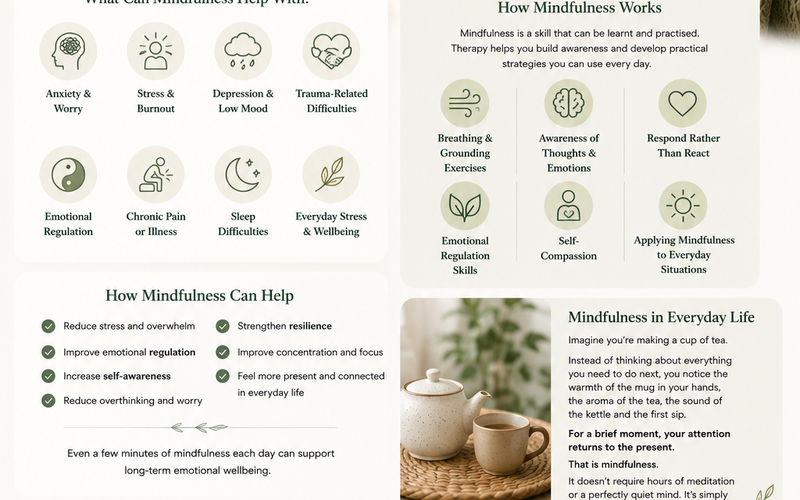
Understanding Mindfulness Based Strategies
Mindfulness is an evidence-based approach that helps you become more aware of your thoughts, emotions and physical sensations without judgement. Learn how mindfulness-based strategies can reduce stress, improve emotional wellbeing and help you respond more calmly to life's challenges.
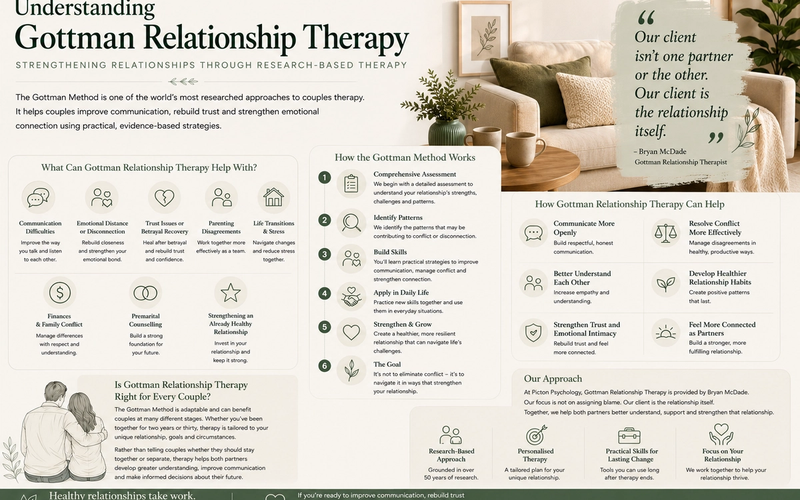
Understanding Gottman Relationship Therapy
The Gottman Method is an evidence-based approach to couples therapy developed from more than 50 years of relationship research. Learn how Gottman Relationship Therapy helps couples improve communication, rebuild trust and strengthen emotional connection.
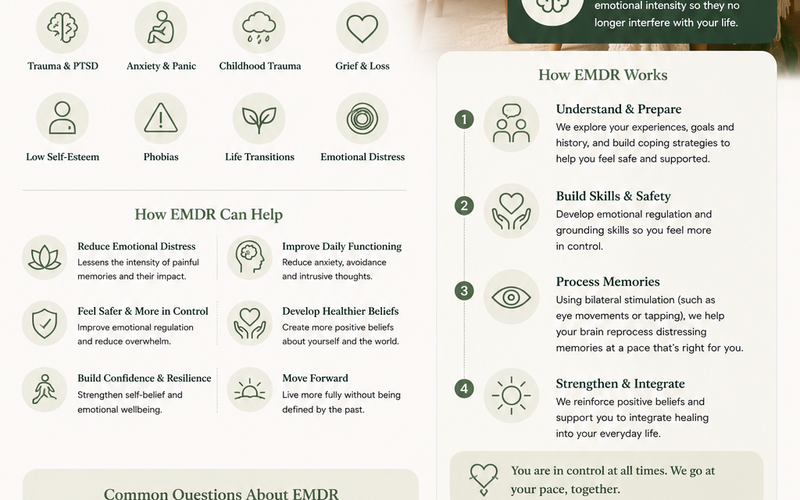
Understanding EMDR Therapy
Eye Movement Desensitisation and Reprocessing (EMDR) is an evidence-based therapy that helps the brain process distressing memories and reduce their emotional impact. Learn how EMDR works, what to expect during treatment and how it can support recovery from trauma and other distressing life experiences.