

What is Trauma
Trauma can affect the way you think, feel and respond long after a difficult experience has passed. Learn what trauma is, how it affects the brain and body, common signs, and how evidence-based therapy can support recovery.

Lisa Arnold
Clinical Psychologist & Director
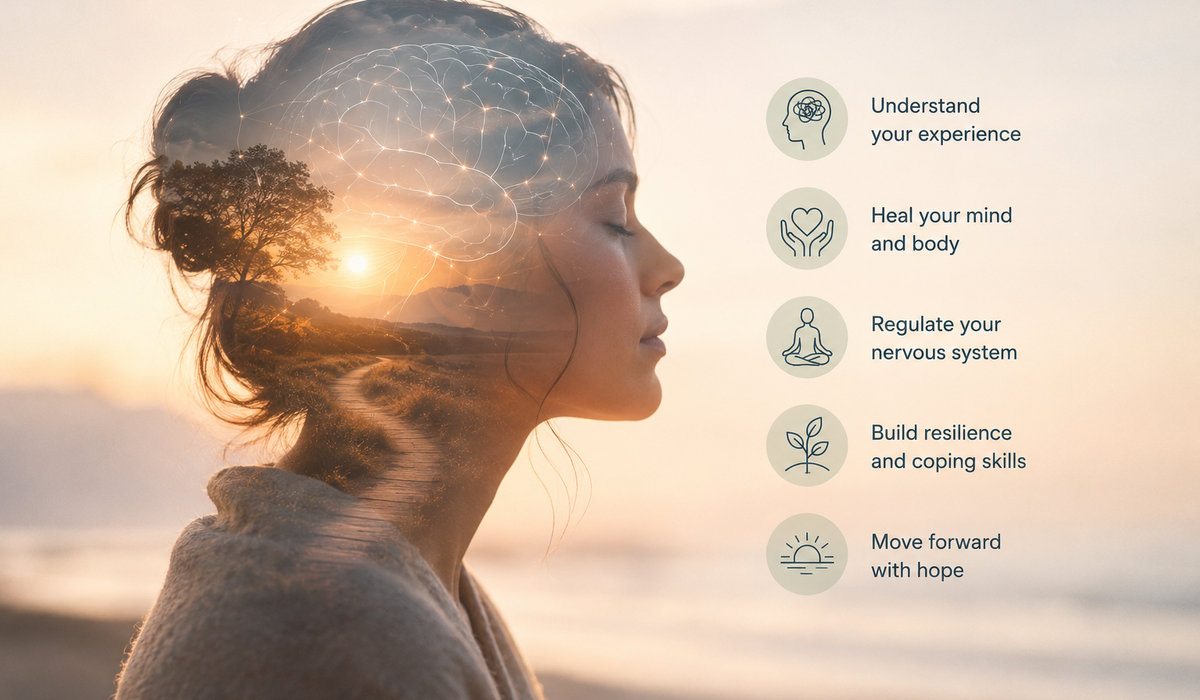
Understanding Trauma
Why Your Brain and Body Respond the Way They Do
Trauma is the emotional, psychological, and physical response to an experience that overwhelms your ability to cope. While many people recover naturally over time, others continue to experience its effects long after the event has passed.
Trauma can result from a single event, such as an accident or assault, or from ongoing experiences like childhood abuse, family violence, bullying or repeated exposure to distressing situations. Trauma is not defined by the event itself, but by how it affects the individual.
Signs trauma may still be affecting you
Trauma can affect everyone differently. Common signs include:
- Feeling constantly on edge or easily startled
- Difficulty relaxing or sleeping
- Distressing memories or nightmares
- Avoiding people, places or situations
- Feeling emotionally numb or disconnected
- Difficulty concentrating or trusting others
These are normal responses from your nervous system that is trying to protect you.
Trauma vs PTSD
Trauma and Post-Traumatic Stress Disorder (PTSD) are not the same.
Trauma refers to your response to a distressing experience. PTSD is a recognised mental health condition that may develop after trauma when symptoms persist and significantly affect daily life. Many people experience trauma without developing PTSD.
Can childhood trauma affect adults?
Yes. Childhood experiences can continue to influence how we think, feel and relate to others throughout adulthood. Some people may experience difficulties with self-esteem, emotional regulation, relationships or feeling safe, without realising these patterns are linked to earlier life experiences.
How trauma affects the brain
When we experience danger, the brain activates a survival response known as fight, flight, freeze or fawn. For some people, this response remains activated even after the danger has passed, making everyday situations feel unsafe or overwhelming.
These reactions are not a sign of weakness. It is the brain's way of trying to protect you.
How therapy can help
Recovery from trauma is possible.
Evidence-based therapy can help you understand your trauma responses, develop practical coping strategies, improve emotional regulation and regain a greater sense of safety and confidence. Treatment is tailored to your individual needs and may include approaches such as Cognitive Behavioural Therapy (CBT), Eye Movement Desensitisation and Reprocessing (EMDR), Acceptance and Commitment Therapy (ACT) and other trauma-informed therapies.
If trauma continues to affect your daily life, you don't have to face it alone. Seeking support is an important first step towards healing and recovery.
Take the Next Step
If you recognise yourself in this article, support is available. Our clinicians provide compassionate, evidence-based therapy tailored to your individual needs. Whether you're ready to book an appointment or simply have questions, we're here to help.
Keep reading
All articles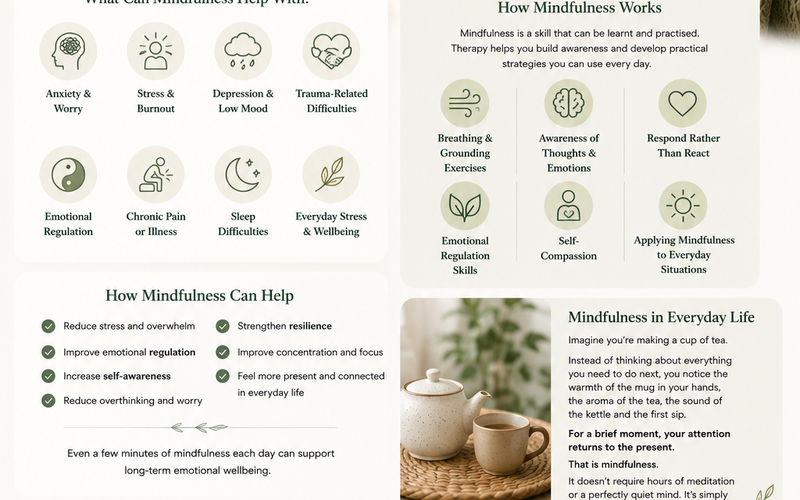
Understanding Mindfulness Based Strategies
Mindfulness is an evidence-based approach that helps you become more aware of your thoughts, emotions and physical sensations without judgement. Learn how mindfulness-based strategies can reduce stress, improve emotional wellbeing and help you respond more calmly to life's challenges.
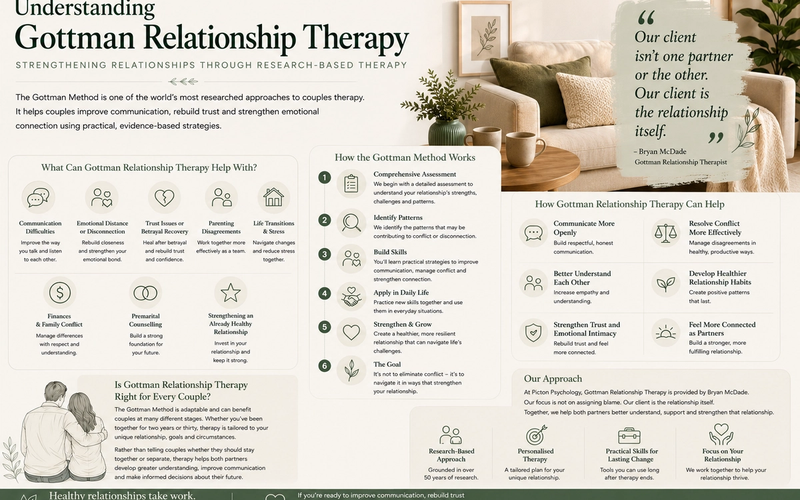
Understanding Gottman Relationship Therapy
The Gottman Method is an evidence-based approach to couples therapy developed from more than 50 years of relationship research. Learn how Gottman Relationship Therapy helps couples improve communication, rebuild trust and strengthen emotional connection.
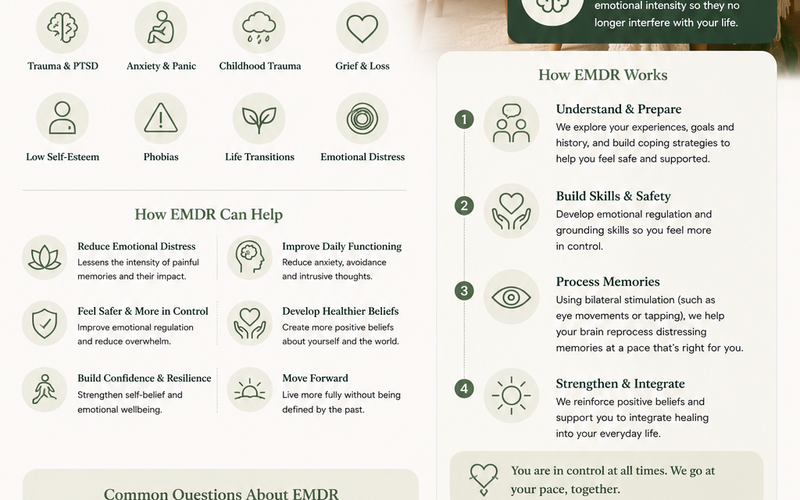
Understanding EMDR Therapy
Eye Movement Desensitisation and Reprocessing (EMDR) is an evidence-based therapy that helps the brain process distressing memories and reduce their emotional impact. Learn how EMDR works, what to expect during treatment and how it can support recovery from trauma and other distressing life experiences.